
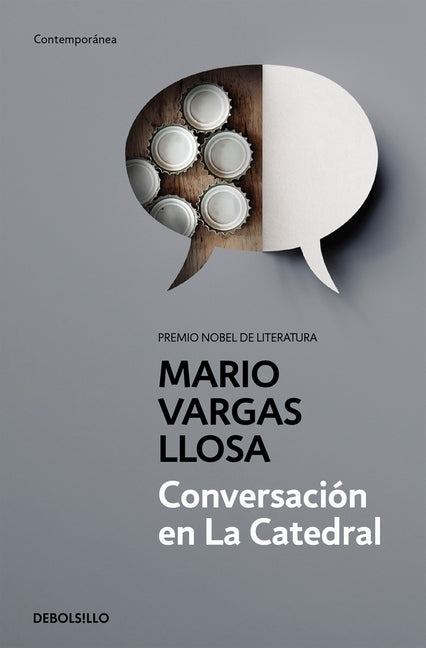

Descripción
Conversation in the Cathedral (1969) is not, however, a historical novel. Its characters, the stories they tell, the fragments that fit together, form the meticulous description of a collective degradation, the review of all the paths that lead an entire people to frustration.
Conversation in the Cathedral is a crude X-ray of the degradation and frustration of Peruvian society under the pressure of dictatorial power. If I had to save only one of the novels I have written from the fire, I would save this one.
Mario Vargas Llosa ENGLISH DESCRIPTION
A conversation is held in the Cathedral during the Manuel A. Odría dictatorship in Peru; over beers and a sea of freely spoken words, the conversation describes the degradation and the frustration of a town. Through a complicated web of private lives, the author analyzes the mental and moral mechanisms that govern power and the people behind it. Conversación en la Catedral is more than a point of reference; it is a landmark in the history of present Literature.
Author: Mario Vargas Llosa
Publisher: Debolsillo
Published: 12/27/2016
Pages: 736
Binding Type: Paperback
Weight: 1.20lbs
Size: 7.40h x 4.90w x 1.60d
ISBN13: 9788490625620
ISBN10: 849062562X
Language: Spanish
BISAC Categories:
- Fiction | Literary
About the Author
Mario Vargas Llosa, Premio Nobel de Literatura 2010, nació en Arequipa, Perú, en 1936. Aunque había estrenado un drama en Piura y publicado un libro de relatos, Los jefes, que obtuvo el Premio Leopoldo Alas, su carrera literaria cobró notoriedad con la publicación de La ciudad y los perros, Premio Biblioteca Breve (1962) y Premio de la Crítica (1963). En 1965 apareció su segunda novela, La casa verde, que obtuvo el Premio de la Crítica y el Premio Internacional Rómulo Gallegos. Posteriormente ha publicado piezas teatrales (La señorita de Tacna, Kathie y el hipopótamo, La Chunga, El loco de los balcones, Ojos bonitos, cuadros feos, Las mil noches y una noche y Los cuentos de la peste), estudios y ensayos (La orgía perpetua, La verdad de las mentiras, La tentación de lo imposible, El viaje a la ficción y La civilización del espectáculo), memorias (El pez en el agua), relatos (Los cachorros) y, sobre todo, novelas: Conversación en La Catedral, Pantaleón y las visitadoras, La tía Julia y el escribidor, La guerra del fin del mundo, Historia de Mayta, ¿Quién mató a Palomino Molero?, El hablador, Elogio de la madrastra, Lituma en los Andes, Los cuadernos de don Rigoberto, La Fiesta del Chivo, El Paraíso en la otra esquina, Travesuras de la niña mala, El sueño del celta, El héroe discreto y Cinco Esquinas. Ha obtenido los más importantes galardones literarios, desde los ya mencionados hasta el Premio Cervantes, el Príncipe de Asturias, el PEN/Nabokov y el Grinzane Cavour.